Sahara Marocain: Uncover the Beauty of Morocco’s Desert
The Sahara Marocain represents a significant geopolitical and historical territoire for Morocco, embodying the nation’s identity and historical continuity.
Recent years have seen major breakthroughs in diplomatie regarding Morocco’s sovereignty over this region, with growing international recognition of Morocco’s position, reflecting a comprehensive vision that integrates development and regional integration.
Morocco has transformed its approach to the question of the Sahara from a territorial claim to a broader strategy, positioning the region as a hub for African development and cooperation, deeply rooted in its rich histoire.
This shift underscores Morocco’s proactive diplomatie and its commitment to maintaining the centrality of territorial integrity in its foreign policy.
Recent Diplomatic Breakthroughs for the Sahara Marocain
The diplomatic landscape surrounding the Sahara Marocain has witnessed significant shifts, with major powers reaffirming their support for Morocco’s sovereignty. This development marks a crucial turning point in the region’s diplomatic dynamics.
United States Reaffirms Recognition of Moroccan Sovereignty
The United States has continued its strong support for Morocco’s autonomy plan, recognizing Moroccan sovereignty over the Sahara. This reaffirmation underscores the strategic partnership between the two nations, emphasizing stability and security in North Africa.
United Kingdom Joins Growing International Consensus
The United Kingdom has aligned itself with the growing international consensus supporting Morocco’s position on the Sahara. This move signifies a broader recognition of Morocco’s autonomy plan as a viable solution, enhancing the kingdom’s diplomatic standing.
France’s Firm Support for Morocco’s Territorial Integrity
France has reaffirmed its firm support for Moroccan sovereignty over its Sahara, marking a notable evolution in the balance of powers within UN bodies. France views Morocco’s autonomy plan as the most credible path forward, prioritizing regional stability and development in North Africa.
The alignment of major Western powers, including the US, UK, and France, creates a new diplomatic logique that strengthens Morocco’s position in international forums. Their support signals a recognition that Morocco’s approach to developing its southern provinces sud contributes to regional intégration and stability, reinforcing the région‘s growth.
- France’s support is particularly meaningful given its historical ties to the region and its permanent seat on the UN Security Council.
- The combined backing from these major puissances enhances Morocco’s diplomatic leverage.
Understanding the Sahara Conflict: Historical Context and Current Stakes
Understanding the Sahara conflict requires a deep dive into its historical context and current stakes. The dispute is multifaceted, involving historical, political, and social dimensions.
Origins of the Dispute: From Spanish Decolonization to Present Day
The Sahara conflict originated from the process of Spanish decolonization in the region. After Spain’s withdrawal, the territory was contested, leading to a protracted dispute. The historical context of this dispute is crucial to understanding its current stakes.
The decolonization process left a power vacuum, which various actors sought to fill. This led to the emergence of the Polisario Front, backed by Algeria, and Morocco’s claim to the territory. The conflict has since evolved, with multiple parties involved and various international positions taken.
Morocco’s Autonomy Plan as a Political Solution
Morocco has proposed an autonomy plan for the Sahara region as a potential solution to the conflict. This plan offers a framework for self-governance while maintaining Moroccan sovereignty. The plan has garnered significant international support, with many countries recognizing it as a credible and pragmatic approach.
The autonomy plan is seen as a compromise that addresses the aspirations of the local population while maintaining regional stability. It represents a political solution that could potentially resolve the conflict.
Algeria’s Position and Regional Implications
Algeria’s continued support for the Polisario Front remains a significant obstacle to resolving the Sahara dispute. This stance is rooted in an ideological position inherited from the Cold War era, which is increasingly at odds with the evolving geopolitical landscape.
Algeria’s approach has significant regional implications, affecting not only the Sahara conflict but also broader regional stability and security. The prolongation of the conflict creates opportunities for extremist groups to exploit, particularly in the Sahel-Saharan region.
| Country | Position on Sahara Conflict | Regional Implications |
|---|---|---|
| Morocco | Advocates for autonomy under Moroccan sovereignty | Stability and economic development in the region |
| Algeria | Supports the Polisario Front | Potential for increased instability and extremism |
| International Community | Increasingly supports Morocco’s autonomy plan | Enhanced regional cooperation and stability |
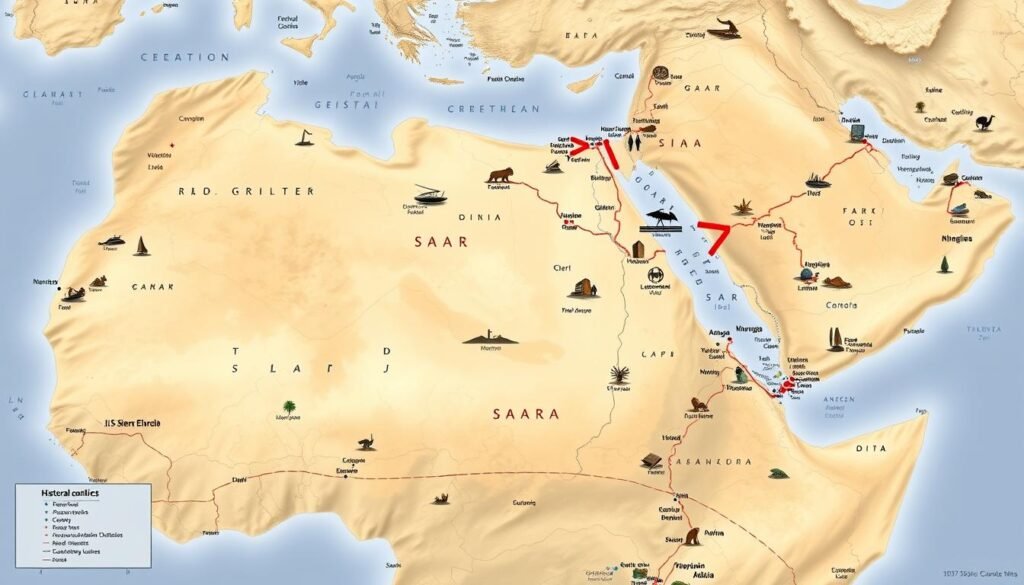
The Sahara conflict is complex, with deep historical roots and significant current stakes. Understanding these elements is crucial to addressing the dispute effectively. Morocco’s autonomy plan offers a potential solution, while Algeria’s position remains a challenge to regional stability.
Morocco’s Strategic Vision for the Southern Provinces
The Kingdom of Morocco has been actively promoting its strategic vision for the Southern Provinces, marking a new era in regional development. This vision encompasses various initiatives aimed at bolstering the economic, diplomatic, and social fabric of the region.
Economic Development Initiatives in Dakhla and Laayoune
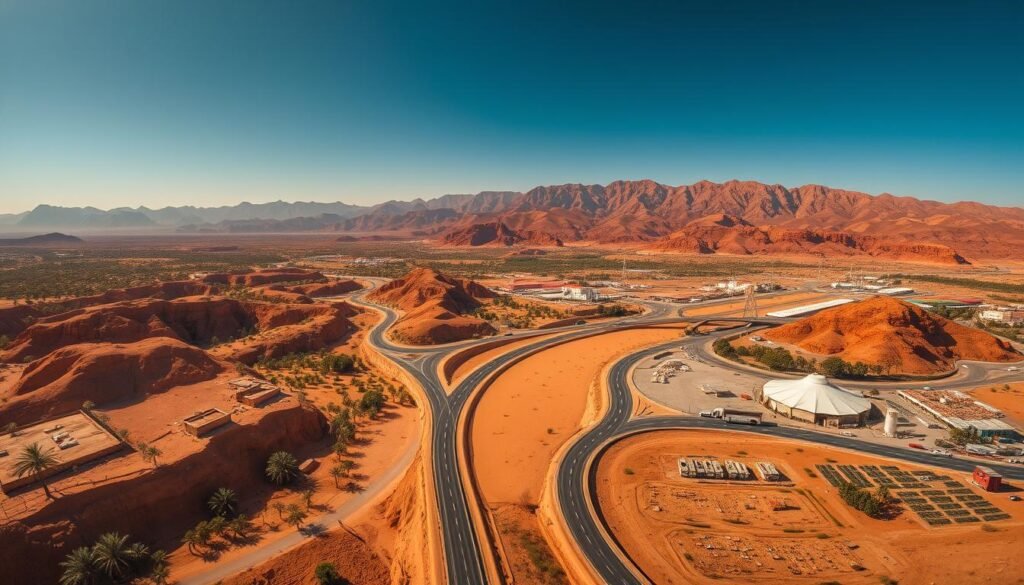
Dakhla and Laayoune, key cities in the Southern Provinces, are witnessing significant economic development. “The investment in these regions is not just about infrastructure; it’s about creating sustainable economic ecosystems,” said a Moroccan official. Initiatives include the development of renewable energy projects, enhancement of port facilities, and promotion of tourism. These efforts are transforming the region into a hub for economic activity, attracting both domestic and foreign investment.
The Atlantic Initiative: Connecting Landlocked African Nations
Morocco’s Atlantic Initiative is a strategic move to connect landlocked African nations to the global market through the Atlantic coast. This initiative is expected to boost trade and economic cooperation between Morocco and these nations, further solidifying the Kingdom’s position as a critical player in regional and international trade.
The initiative is a game-changer for the region, providing new opportunities for economic growth and development. By enhancing connectivity, Morocco is not only strengthening its own economy but also contributing to the economic prosperity of its African partners.
Diplomatic Representation in the Southern Provinces
In recent years, dozens of countries have opened diplomatic and consular representations in Laayoune and Dakhla, a significant development in the context of the Sahara question. This wave of diplomatic representation constitutes de facto recognition of Morocco’s sovereignty over these territories. As noted by a diplomat, “This is a clear indication of the international community’s growing support for Morocco’s position on the Sahara issue.”
The establishment of these diplomatic missions represents a significant evolution in how countries approach the question of the Sahara, moving from abstract support to concrete presence. Each new consulate opening strengthens Morocco’s position and creates a diplomatic reality on the ground that becomes increasingly difficult for opponents to challenge in international forums.
Conclusion: The Future of the Sahara Marocain in a Changing Global Order
Sahara Marocain: As the world witnesses a significant shift in global alliances, Morocco’s approach to the Sahara Marocain question is gaining international recognition. The Sahara issue is no longer a local question; it has become a revealer of new fault lines and alliances in the emerging multipolar world.
By adopting a diplomacy of openness and large-scale projects, Morocco is asserting itself as a pivotal actor in the reconfiguration of the African continent. The future of the Sahara Marocain will likely be shaped by the convergence of diplomatic recognition, economic development, and Morocco’s strategic vision for regional integration.
The growing international consensus around Morocco’s autonomy plan suggests that pragmatic solutions balancing sovereignty with local governance may become a template for resolving similar disputes. Morocco’s success in the Sahara affair offers valuable lessons on the effectiveness of patient, multidimensional diplomacy combined with tangible development projects.